
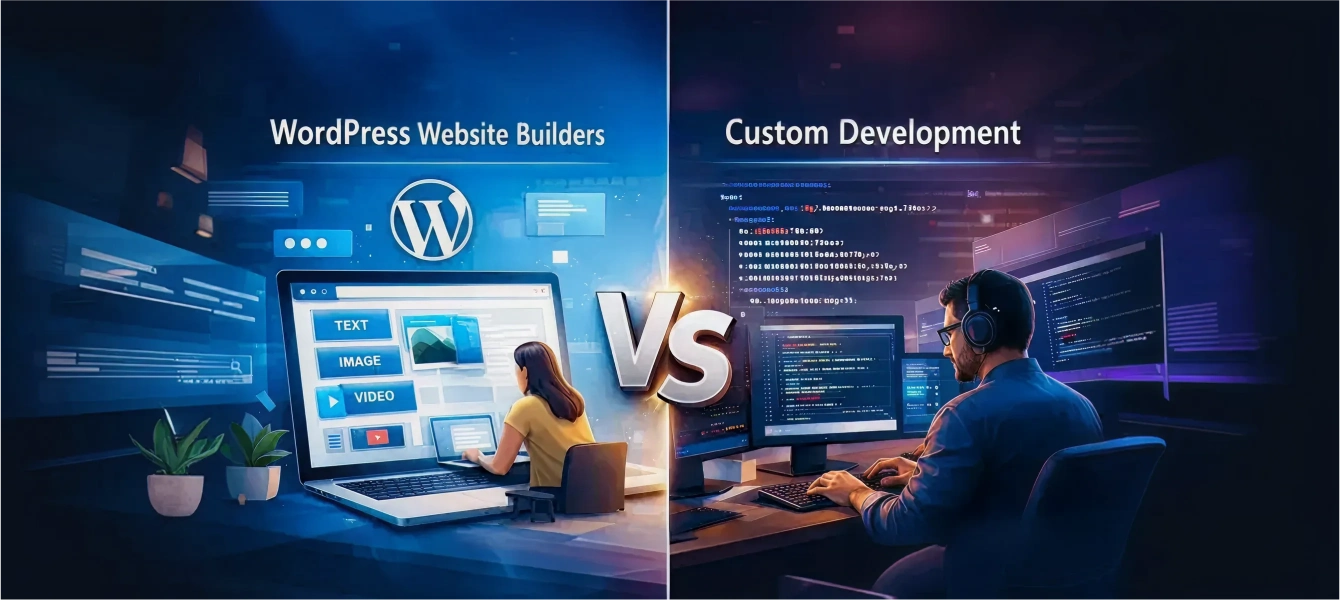
WordPress vs Custom Code: When You Should Stop Using Plugins
WordPress is powerful because of its flexibility. Plugins allow businesses to add features quickly without building everything from scratch. However, there comes a point where adding more plugins starts hurting performance instead of helping it.
Understanding the balance between WordPress vs custom code is critical, especially as your website grows in complexity.
Why Plugins Are Useful
Plugins are ideal when you need:
- Basic contact forms
- SEO management tools
- Simple ecommerce functionality
- Security enhancements
For small or medium-sized websites, plugins provide fast solutions without heavy development costs.
When Plugins Become a Problem
As your website scales, excessive plugins can create technical challenges.
Common issues include:
- Slow loading speed
- Conflicts between plugins
- Security vulnerabilities
- High server resource usage
- Frequent update issues
Every plugin adds code to your website. Over time, this can increase complexity and reduce stability.
Signs You Should Consider Custom Code
You may need to move toward custom development if:
- You rely on multiple plugins for overlapping features
- Your website performance drops during traffic spikes
- You need highly specific functionality not available in standard plugins
- You require deeper system integrations (CRM, ERP, custom dashboards)
Custom code provides tailored solutions without unnecessary overhead.
Performance and Scalability Considerations
In the debate of WordPress vs custom code, scalability is a key factor. Plugins are built for broad usage. Custom development is built specifically for your business.
As traffic increases and systems become more complex, lean architecture becomes essential. Reducing plugin dependency often improves performance and long-term maintainability.
Security Implications
Each plugin introduces potential security risks, especially if updates are delayed. Custom-coded features, when built securely, reduce reliance on third-party updates and vulnerabilities.
However, custom code must also be maintained properly to remain secure.
Cost Considerations
Plugins often seem cost-effective initially. But stacking premium subscriptions and managing performance fixes can increase costs over time.
Custom development may require higher upfront investment but can reduce long-term operational friction.
Finding the Right Balance
The decision is not about eliminating plugins entirely. It is about strategic use.
Use plugins for stable, well-supported functionality. Choose custom code when:
- Your website becomes mission-critical
- Performance is directly tied to revenue
- You need competitive differentiation
Final Thoughts
The WordPress vs custom code decision depends on your growth stage. Plugins are powerful tools, but over-reliance can limit scalability.
As your business evolves, a cleaner, more structured development approach often delivers stronger performance and stability.